Collection: Donald Sultan

Donald Sultan (b. 1951)
Born in 1951 in Asheville, North Carolina, Donald Sultan received his BFA from the University of North Carolina, Chapel Hill and his MFA from the School of the Art Institute in Chicago. He moved to New York in 1975.
The work of Donald Sultan is voluminous and varied. Since his first one-man show in 1977, he has enjoyed a distinguished career as painter, printmaker, and sculptor. His extensive body of work has placed him at the forefront of contemporary art, where he has become best known for his ability to successfully merge the best of yesterday’s artistic tradition with a fresh, modern approach that is unique.
Although his paintings fit into the criteria of a still life, Sultan describes these works as first and foremost abstract. The largeness of Sultan’s compositions, huge pieces of fruit, flowers, dominoes and other objects, set against the stark, unsettling tar-black, eight-foot square background, dominate the viewer. He is best known for his lemons and fruit, and states that his subjects develop from previous work. The oval of his lemons has led to a series of oval-blossomed tulips. Dots from dice have become oranges. What does not change with Sultan’s work is the powerful statement his forms make. Sultan’s work incorporates basic geometric and organic forms with a formal purity that is both subtle and monumental. His images are weighty, with equal emphasis on both negative and positive areas. Sultan describes his work as “heavy structure, holding fragile meaning” with the ability to “turn you off and turn you on at the same time.” Sultan’s still lifes have been described as studies in contrast. His powerfully sensual, fleshy object representations are rendered through a labor-intensive and unique method.
Sultan has been given numerous exhibitions dedicated to his work, as well as having been included in a number of group shows. His work is included in the permanent collection of many prestigious institutions including The Art Institute of Chicago, the Museum of Fine Arts, Boston, the Museum of Contemporary Art, Tokyo, The Museum of Modern Art, New York, the Dallas Museum of Fine Arts, the Metropolitan Museum of Art, New York, the Solomon Guggenheim Museum, New York, the Tate Modern, London, and the Whitney Museum of American Art, New York.
-
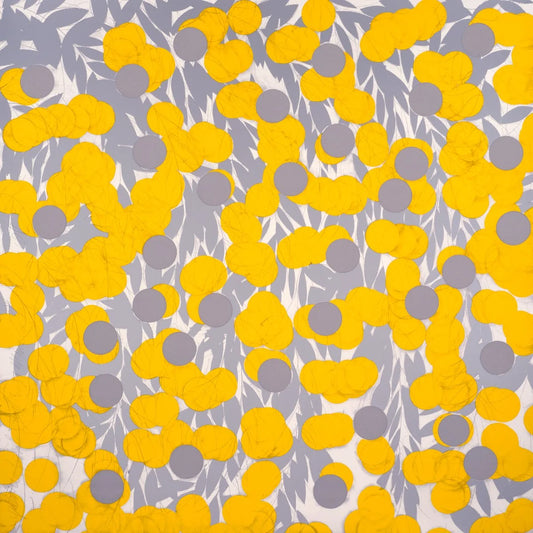
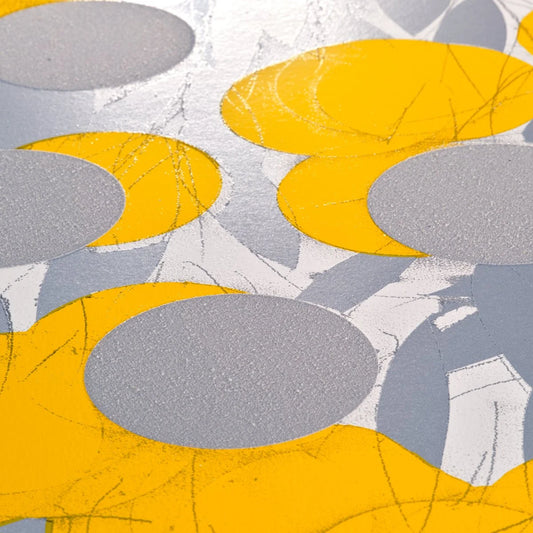
"Yellow with Silver & Cement Mimosa, June 13, 2024"
Vendor:Donald SultanRegular price Price on RequestRegular priceUnit price per -
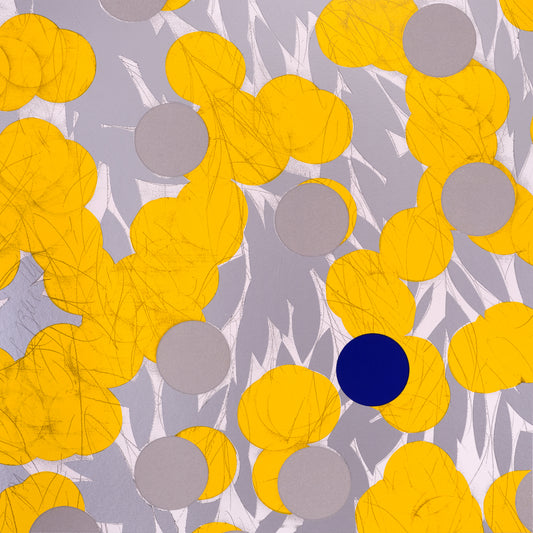
"Mimosa with Blue April 24, 2024"
Vendor:Donald SultanRegular price $2,500Regular priceUnit price per -
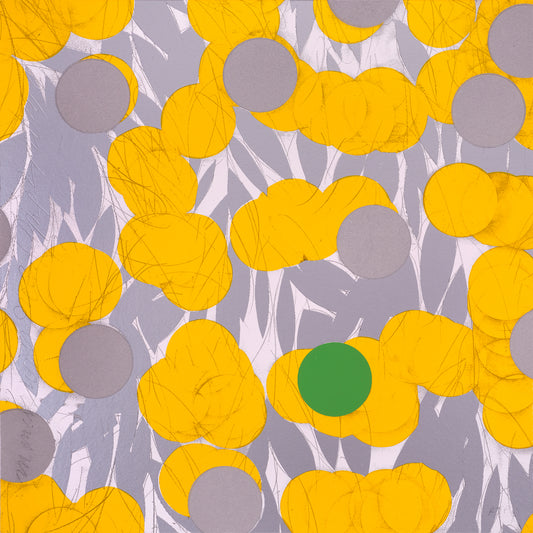
"Mimosa with Green April 24, 2024"
Vendor:Donald SultanRegular price $2,500Regular priceUnit price per -
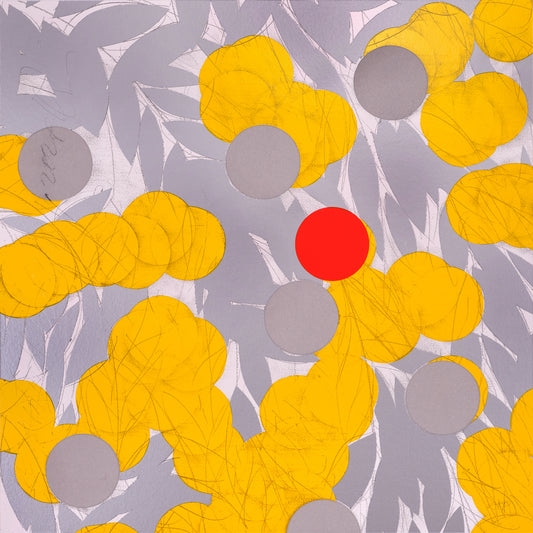
Mimosa with Red April 24, 2024"
Vendor:Donald SultanRegular price $2,500Regular priceUnit price per -
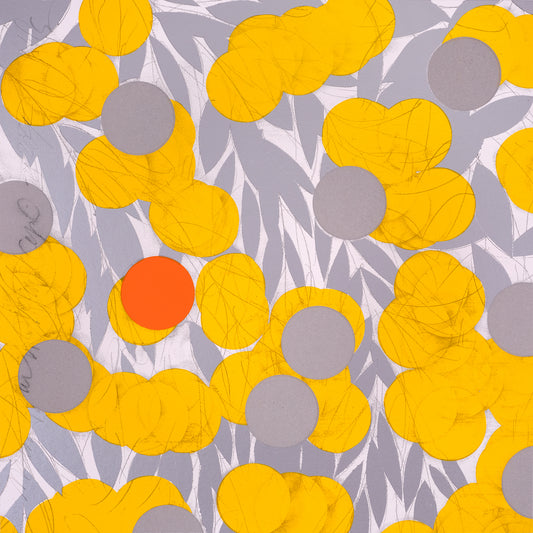
"Mimosa with Orange April 24, 2024"
Vendor:Donald SultanRegular price $2,500Regular priceUnit price per -
"Seven Silvers, Jan 24, 2024"
Vendor:Donald SultanRegular price Price on RequestRegular priceUnit price per -
"Seven Blues, Jan 24, 2024"
Vendor:Donald SultanRegular price Price on RequestRegular priceUnit price per -
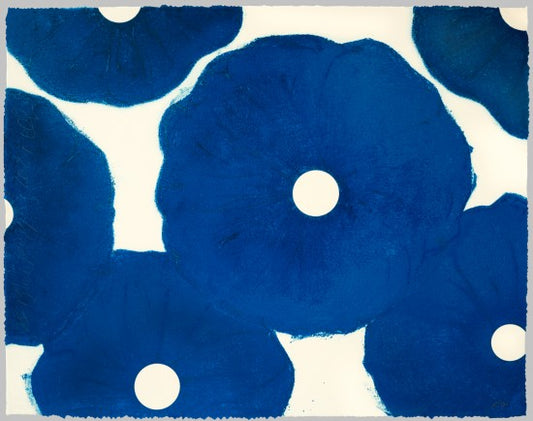
“Six Blue Poppies, 2021”
Vendor:Donald SultanRegular price $4,950Regular priceUnit price per -
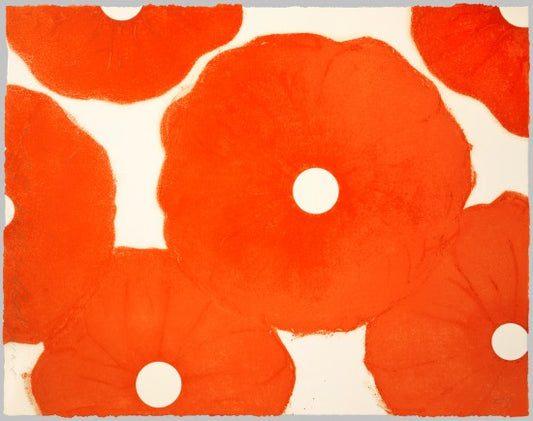
“Six Red Poppies, 2021”
Vendor:Donald SultanRegular price $4,950Regular priceUnit price per -
"Six Green Poppies, 2021"
Vendor:Donald SultanRegular price $5,000Regular priceUnit price per -
"Six Yellow Poppies, 2021"
Vendor:Donald SultanRegular price $5,000Regular priceUnit price per -
"Six Black Poppies, 2021"
Vendor:ebo GalleryRegular price $5,000Regular priceUnit price per -
“Five Poppies Portfolio”
Vendor:Donald SultanRegular price Price on RequestRegular priceUnit price per -
"Mimosa, Sept 29, 2021"
Vendor:Donald SultanRegular price Price on RequestRegular priceUnit price per -
"Orange and Green, June 17, 2021"
Vendor:Donald SultanRegular price Price on RequestRegular priceUnit price per -
"Mimosa with Red"
Vendor:Donald SultanRegular price Price on RequestRegular priceUnit price per -
“Blues and Blacks, Aug 20, 2020”
Vendor:Donald SultanRegular price Price on RequestRegular priceUnit price per -
“Reds and Blacks, Aug 20, 2020”
Vendor:Donald SultanRegular price Price on RequestRegular priceUnit price per -
“Silvers and Blacks, Aug 20, 2020”
Vendor:Donald SultanRegular price Price on RequestRegular priceUnit price per -
"Silver & Black Poppies, Feb 3, 2020"
Vendor:Donald SultanRegular price Price on RequestRegular priceUnit price per -
“Blue and Black Poppies, Feb 3, 2020”
Vendor:Donald SultanRegular price Price on RequestRegular priceUnit price per -
“Red and Black Poppies, Feb 3, 2020”
Vendor:Donald SultanRegular price Price on RequestRegular priceUnit price per -
“Yellow and Black Poppies, Feb 3, 2020”
Vendor:Donald SultanRegular price Price on RequestRegular priceUnit price per -
“Blue Poppies 2018”
Vendor:Donald SultanRegular price $5,000Regular priceUnit price per